Labor Camps in the UAE – A Struggle for Ethnic Identity vs. Planning Formality
Bezalel Academy of Arts and Design · 2021
In collaboration with Arch. Eviatar Levi, guided by Arch. Erez Ella, and Arch. Nof Nathansohn

Labor Camp Typologies
In the UAE, worker housing conditions are defined by law and provided to labor migrants earning less than 2,000 dirhams. These worker camps, often in the desert to support the oil and energy industries, function as temporary cities with housing, religious buildings, and public spaces. The camps are nearly identical—formal, sterile, and highly hierarchical. However, migrant workers, men from Southeast Asia and Africa, bring their culture and identity into daily life through food, music, and routines.
Despite strict regulations, they struggle to express themselves. Like Manhattan, the camps are based on a rigid grid controlled by influential stakeholders, yet cultural and ethnic expressions still emerge. The open question remains:
will the labor migrants in the UAE, who are the true majority,
ever gain the power to shape their space?
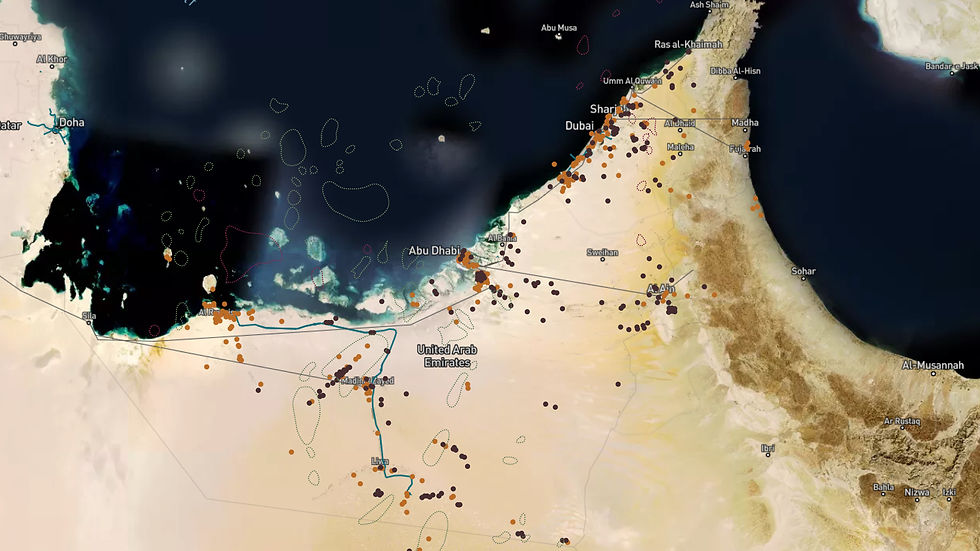
Oil Industry Placement in Relation to Labor Camp Locations
Due to the lack of public discourse and available documentation regarding the conditions of migrant workers in UAE labor camps, our research methodology was critically dependent on creative, non-traditional strategies for information gathering.
Postman scraping
locate the
labor camps
YouTube videos analysis
create a comprehensive picture of laborers’ lives
Mapbox
Spatial data
Visualization

The Camp's Life

Infrastructures: Train, Labor Camps, Electricity

A Labor Camp Plan


Accommodation Typologies


Accommodation / Mosque / Dining Room

To Characterize the Public Space